
Share Thomas Sawyer Hopkins's obituary with others.
Invite friends and family to read the obituary and add memories.
Stay updated
We'll notify you when service details or new memories are added.
You're now following this obituary
We'll email you when there are updates.
Select your format and elements to print

IN LOVING MEMORY OF Thomas Sawyer Hopkins
Thomas Sawyer
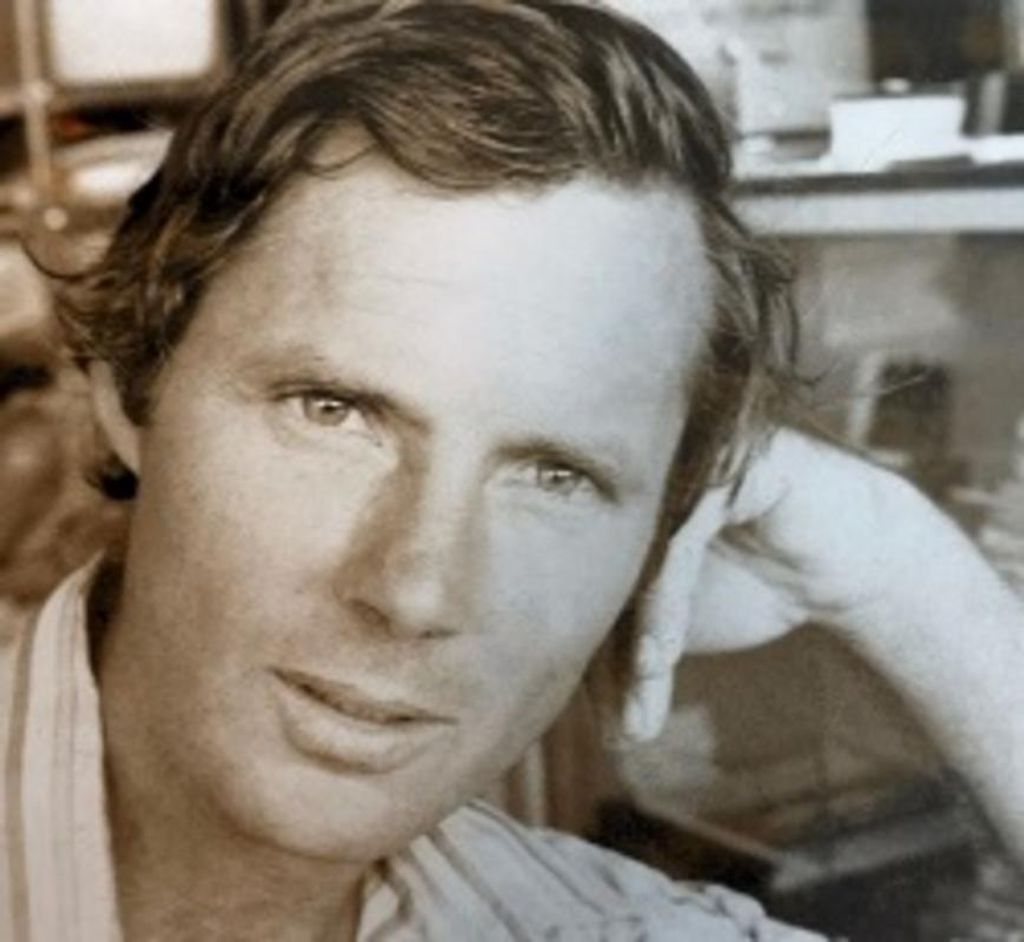
Hopkins
d. Jun 29, 2025
Skillman
Thomas Sawyer Hopkins' Obituary
Thomas Sawyer "Hop" Hopkins left this world a better place. Born on February 12, 1937 in Southern California, he was raised with his two brothers working and playing equally hard on their family farm, barefoot amidst the avocado and lemon trees and always jumping into the reservoir after chores. With a Navy scholarship, he graduated from University of Southern California with an AB in Mathematics. Never one to shy away from challenges, he served as an officer in the Navy and part of Underwater Demolition Team and Seal Team 12. He also was a paratrooper. Stories and reel-to-reel movies from that era show him jumping from helicopters, jogging with telephone poles on the beach, and treading ocean water all night long. Because he scored top of his group in radar operation, he was on duty July 1, 1962 when China flew into international airspace. His calm head kept the incident uneventful and he was retroactively granted active duty status for that single day.
While based in Coronado, friends set him up on a blind date with Dartha Cabot Brokenshire. It was love at first sight. After a few months of surfing and hiking and dining at the officers' club together, he shipped off to Japan and sent her long poems. They married within a year. Once married, they moved to Berkeley where he pursued another BA in Astronomy while Dartha taught fifth grade, driving to school across the bridge in their old convertible, holding the top down manually in inclement weather. After that, they moved to Seattle where Tom next began a PhD program in Physical Oceanography at the University of Washington. There, the couple lived on a houseboat in Portage Bay and hosted memorable parties. In 1966 Tom resigned from the Naval Reserves in protest of U.S. presence in Vietnam. It was so early in the conflict that the Navy, shocked, let him do it. In 1967 the couple's daughter was born. In 1969 their son was born, just as Tom finished his dissertation and the family moved to Greece for his Fulbright position at the University of Athens.
In Greece, he researched and lectured at the University during a time of political turmoil. Nonetheless, in the summers he used his Navy skills to head up a team of underwater archaeologists. The family camped on various islands to accompany him and join the adventure. After four and a half years, the family left Greece and traveled by ocean liner via Naples to America. There, Tom found a position as Researcher at Bigelow Labs in Boothbay Harbor, Maine. They bought an old house on Southport Island and restored it themselves. When the funding ran out at Bigelow, he took a position at Brookhaven National Labs and the family tried their hands at suburbia in Port Jefferson, New York, once again restoring an old house. His research had him working in local waters, the Atlantic, and the North Sea; at one point, he studied Russian and joined a Soviet vessel for a painstakingly approved joint research project. During this time, Tom began mentoring Italian graduate students and longed to return to the Mediterranean that reminded him of the undeveloped Southern California of his youth. It would take seven years before he accepted the perfect job as Senior Principal Scientist at the NATO Saclant Center in La Spezia, Italy. There, Tom, Dartha, and Seth lived in a little village on the Magra River with a view of the Carrara Mountains. Windsurfing, boating, hiking, traveling with friends, and local dining kept them very happy.
In 1991, his Saclant term finished, Tom accepted a position as Professor in the Marine Sciences Department at North Carolina State in Raleigh. There, he began teaching an interdisciplinary course for upperclassmen of all majors that examined how the environment and sustainability applied to all areas of study. Sustainability became his next passion, eventually leading him to advising and coordinating with the European Union on policies that were sustainable, good for business and the environment. This position continued after he retired from NC State, and he and Dartha lived part time in Naples. He also took a short Fulbright professor position in Portugal.
In 2006 Tom and Dartha moved to Princeton, New Jersey to be near their daughter Faith, her husband Chris, and their young twin daughters, May and Ella. When Tom and Dartha weren't in Naples, they walked the girls to elementary school every day without fail. On many weekends, the girls stayed overnight with them and had an established routine of fun walks and delicious treats around town. Tom and Dartha also hosted their son Seth and his children, Sofie and Sawyer, for week-long New Year's celebrations every year. In the summers, Tom and Dartha hosted all four grandchildren at the extended family home in New Hampshire. Swimming, building tree houses, and movies at night kept grandparents and grandchildren happy.
Intellectually Tom kept busy writing a book about environmental sustainability, walking daily to the Princeton Library where the librarians knew him well. Always a systems thinker, he created a website to process and share all that he had come to understand during his career (sustainabilitycrisis.info). He cared deeply and equally for the environment and its people, and this became his final act of love for the world.
When the couple moved to Stonebridge in 2023, Tom had already been living with dementia. Still, the writing continued and Tom walked and swam daily, making friends around campus for as long as he could. Dementia eventually stole first his movement and then his language, but he still could squeeze a hand like no one else. His last pleasure was riding in his wheelchair with his granddogs on his lap. After weeks in the care of Stonebridge and hospice, with family lovingly watching over him, he passed away peacefully on June 29, 2025 with Dartha at his side.
Tom, or "Hop" as he was affectionately called by all since his Navy days, will be remembered for his extraordinary physical presence–he was always in motion and he could rub a back or a foot like a healer. By our count, Hop built at least five tree houses around the world. Hop also chopped down many trees, chopped wood for the fire almost daily, and performed countless repairs of all types on old homes, including the one in New Hampshire. One summer he used an old oceanographic rope to string across the lake as a zip line from a tall tree on one side and the tree platform he had built for his and Dartha's tent on the other. Other times, he swam the lake so stealthily that he would surprise kayakers by emerging from the depths and rocking their boats.
Most importantly, his generous, loving spirit connected him with many people around the world as he mentored, befriended, participated, and cared deeply. In his life, he spoke enough French, Greek, Russian, Italian, and even Portuguese to either get by, conduct research, or present at scientific conferences. He was a member of the loving community of Meher Baba, cherishing the friends he made and the time he spent at the Center at Myrtle Beach. All his life, Hop was a big thinker, a maverick, his intellect also always in motion. Even when deafness (from UDT work) and dementia separated him from the world, he reached out with ideas and then smiles of acknowledgement until the very end. His spirit lives on, frolicking, testing, and loving.
Thomas Sawyer Hopkins' Guestbook

Visits: 8
This site is protected by reCAPTCHA and the
Google Privacy Policy and Terms of Service apply.
Service map data © OpenStreetMap contributors