
Share John Way Vincent's obituary with others.
Invite friends and family to read the obituary and add memories.
Stay updated
We'll notify you when service details or new memories are added.
You're now following this obituary
We'll email you when there are updates.
Select your format and elements to print


IN LOVING MEMORY OF John Way Vincent
John Way
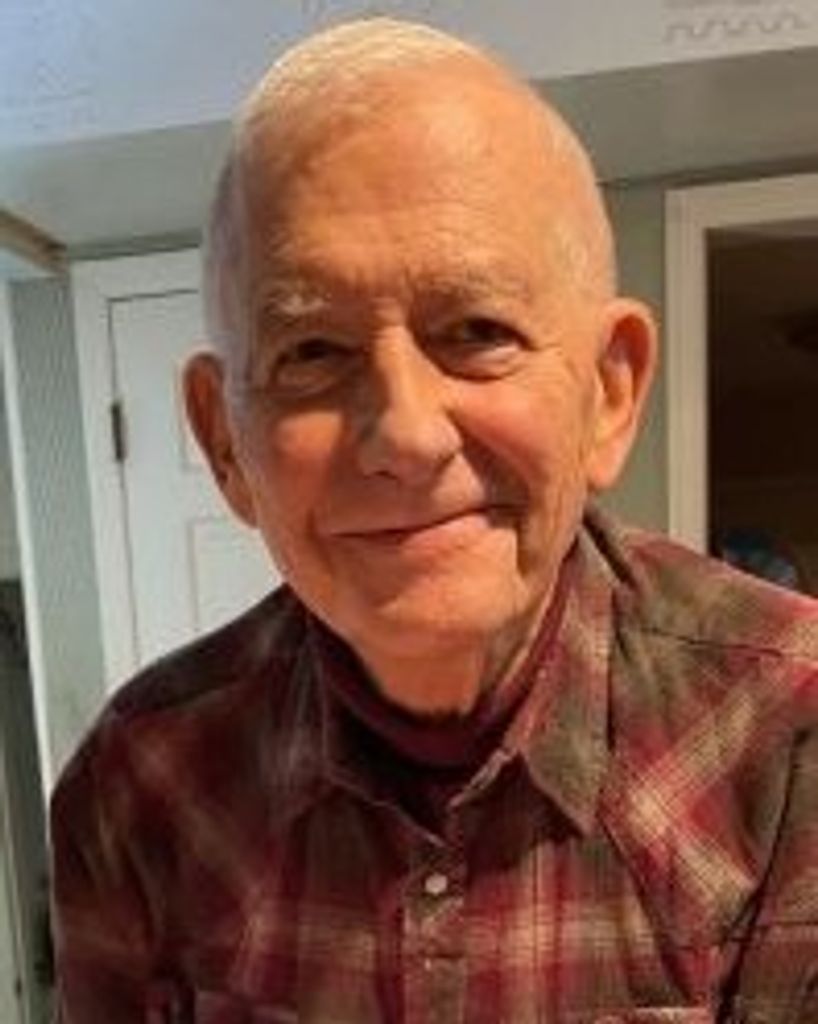
Vincent
Jun 20, 1938 — Sep 5, 2026
East Windsor
John Way Vincent's Obituary
The near-daily reporting — articles with his customized analysis in email missives to family members, former colleagues, and friends — has come to a stop.
John Way Vincent, 88, died peacefully on September 5 with his loving wife Delia by his side at his home in East Windsor, New Jersey.
John was a lifelong voracious reader of non-fiction, in particular history, and consumed a massive amount of news and shared his knowledge with anyone who expressed the slightest interest in an obscure topic that he found fascinating. Later in life, he became deeply concerned about the demise of professional journalism, and the correlation to the declining state of democracy in the United States.
He was a progressive of the non-performative kind, who had a deep commitment to equality, peace, and justice. When his values did not align with his work – such as serving as a diplomat under U.S. Presidents Ronald Reagan and George H.W. Bush – he quietly hunkered down to keep churning out analysis that he hoped would serve to help shape policy that promotes greater understanding and cooperation across borders.
John was born on June 20, 1938, to Mary Wilson Smith Vincent and Howard P. Vincent in Hillsdale, Michigan where his father was a professor of English. The family moved to Wilmette, Illinois near Chicago, and John and his older sister Judith attended a University of Chicago Laboratory School where John’s intellectual curiosity and love of learning was first nurtured. When he was a teenager, he attended Westtown, a Quaker boarding school in Pennsylvania where his mother and grandfather were educated.
John initially hated Westtown, and experienced his first serious bout of depression there, but finally found track and field, as well his earliest intellectual mentors. He also briefly went to school in Paris, where his father was teaching at the Sorbonne, and his time there opened his eyes to the world outside the United States.
John’s Quaker education continued at Swarthmore College where he majored in political science. He fell madly in love with a classmate, Tipper, whom he hoped to marry, but her parents shipped her off to Europe to put an end to that relationship. Heartbroken, he moved back to Chicago and briefly flirted with the law at the University of Chicago, and married a fellow law student, Lillian. That marriage lasted a year, minus a day, and by then John was working for the U.S. Census Bureau and had applied to join the U.S. foreign service, very much influenced by President Kennedy’s famous line: “Ask not what your country can do for you—ask what you can do for your country.”
He met his second wife, Shelagh O’Rourke, at a local bar in Chicago after her performance at the nearby Hull House Theater. A few months later John was accepted into the foreign service, and they moved to Washington, D.C. and then quickly onto Canberra, Australia, his first foreign posting. From there, with toddler Rachel and baby Matt in tow, they moved to the Democratic Republic of the Congo – only a few short years after the country had freed itself from the shackles of Belgium. John developed a keen interest in and respect for post-colonial Africa, particularly its political struggles.
After a brief stint at Yale University, where John did African studies, the family moved to Washington, D.C. The anti-Vietnam War movement was at its peak, and John was part of a group of foreign service officers who tried to unionize the State Department. In 1974, he was posted to Port-au-Prince, Haiti, where he met his third wife, Mary Kottke Vincent, an aid worker. Then, after taking a short stint serving as a special advisor to Michigan Governor William Milliken, a moderate Republican, John returned to Washington, D.C. There he served at the Africa Bureau of the State Department, and was posted to Bamako, Mali.
John met his fourth wife, his love of life and intellectual partner, when Delia Pitts, an economic historian, was on assignment from the World Bank to the State Department. Together they served as foreign service officers in Lagos, Nigeria, Nouakchott, Mauritania, and Mexico City, Mexico with their twins, Adam and Nick. Finally done with the overseas life – John retired from the foreign service – they moved to Dallas-Fort Worth, Texas to allow Delia to launch a new career in academia.
In Dallas, John pursued his interest in labor issues, working as a special advisor to the trinational Labor Commission created after the signing of the North American Free Trade Agreement in the mid-90s. In 2001, the family followed Delia’s career to the East Coast, and settled in East Windsor, New Jersey, where John focused on raising Nick and Adam, packing lunches and shuttling the boys to basketball practices. For three years he also was an adjunct professor of international labor history in the labor studies department of Rutgers University main campus in New Brunswick.
Back on the East Coast, John returned to his roots and his values as a Quaker and was active with the Princeton Friends Meeting, serving on various committees and as the liaison to the Princeton Clergy Association. He also served for many years as the President of the Princeton-Trenton chapter of the United Nations Association and was very involved with the Coalition for Peace Action, a Princeton-based organization with an international scope. When the Trump administration came to power, John turned much of his energy to supporting local Democrats and participating in local No King protests.
John was a proud Westtown and Swarthmore alumni, often attending reunions at both schools.
In his final months, John focused on his role as chief cheerleader and champion of Delia’s latest career, as a writer.
John is survived by his wife, Delia Pitts, his children Rachel Vincent (Sacramento, California), Matthew Vincent (Luxembourg, Luxembourg), Adam Vincent (Fort-Worth, Texas), and Nicholas Vincent (Philadelphia) , and his grandchildren Lina Sakkal and Mazen Sakkal (Ottawa, Ontario) and Zayne Sakkal (Montreal, Quebec), Selma Vincent (Capo Verde) and Nael Vincent (Montreal, Quebec), his niece Anne Wise (Cleveland, Ohio), and his nephews Peter Wise (Shaker Heights, Ohio) and Michael Wise (Portsmouth, New Hampshire), and brother-in-law Stephen Pitts (Oakland, California).
Contributions may be made in John’s memory to Habitat for Humanity and the Southern Poverty Law Center.
John Way Vincent's Guestbook

Visits: 489
This site is protected by reCAPTCHA and the
Google Privacy Policy and Terms of Service apply.
Service map data © OpenStreetMap contributors