
Share Henry Horn's obituary with others.
Invite friends and family to read the obituary and add memories.
Stay updated
We'll notify you when service details or new memories are added.
You're now following this obituary
We'll email you when there are updates.
Select your format and elements to print

IN LOVING MEMORY OF Henry Horn
Henry
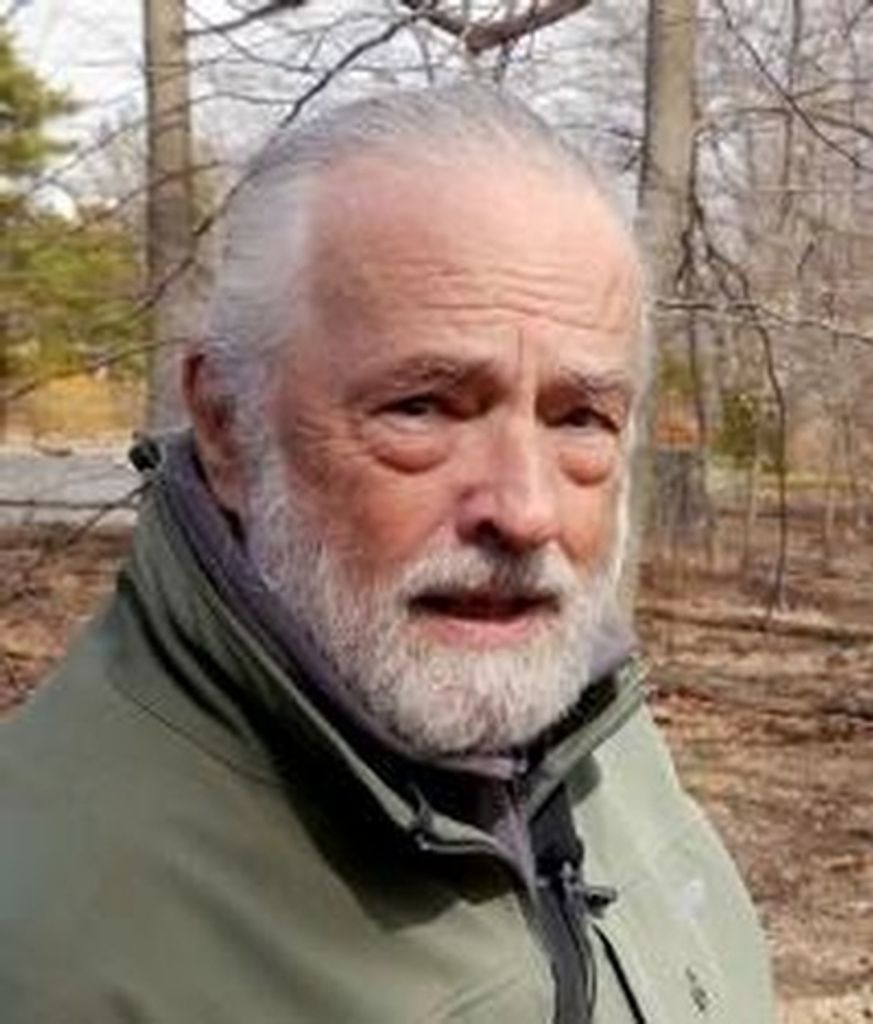
Horn
d. Mar 14, 2019
Princeton
Henry Horn's Obituary
Henry Horn, professor of ecology and evolutionary biology, emeritus, a scholar and fervent naturalist for whom Princeton's campus and the surrounding areas provided a rich biosphere for study, died suddenly March 14 at Princeton. He was 77.
Horn joined the Princeton faculty in 1966 amid a wave of interest in evolution and ecology in the then-Department of Biology.
In 1991, he led the University into a new era of interdisciplinary environmental research as founding director of the Program in Environmental Studies. He transferred to emeritus status in 2011.
"Henry Horn was one of the stalwart pillars of the department," said Daniel Rubenstein, the Class of 1877 Professor of Zoology, professor of ecology and evolutionary biology, and director of the Program in Environmental Studies. "He had an original mind and was so caring. He saw patterns in the natural world that others often overlooked, and he had a unique ability to identify why they came to be and how they worked. He was so generous and genuine in his encouragement of students and colleagues and provided personal and intellectual glues that helped hold the department together. He will be sorely missed."
Simon Levin, the James S. McDonnell Distinguished University Professor in Ecology and Evolutionary Biology, said Horn was "a brilliant scientist who continued to add to the intellectual life of the department. He also was a wonderful human being. His principal impact was on the students, the culture, and the cultivation of the climate of good collegiality and good mentorship."
Horn was a mentor to generations of students.
A common theme in Horn's work was a combination of geometry in conception, mechanical inventiveness in measurement, and "muddy boots" fieldwork in execution, noted an entry in the Princeton emeritus booklet upon Horn's retirement.
Horn had a lasting interest in the growth of trees, in particular, how they got their shape and their branching patterns. Part of his tree work was published in "The Adaptive Geometry of Trees" in 1971.
Horn also studied the wind dispersal of seeds and forest succession, and he had a longtime fascination with butterfly behavior.
Horn was born in Philadelphia on Nov. 12, 1941, the son of Catherine Stainken and Henry E. Horn, a Lutheran pastor. His family moved to Virginia and Georgia, eventually settling in Cambridge, Massachusetts, where he attended Cambridge High and Latin School.
He completed his A.B. at Harvard University in 1962 and his Ph.D. at the University of Washington in 1966. His Ph.D. thesis was a pioneering study on the adaptive nature of the social behavior of blackbirds.
Over the years, Horn's research took him across the continental United States and Canada, and to locations across the globe including Central and South America, Austria, Britain, France and Japan.
But it was the areas in and around Princeton that most-often served as a muse and a setting for his fieldwork and teaching.
He was an expert on the ecology of the Princeton campus and the Institute Woods surrounding the Institute for Advanced Study.
An editorial consultant to Princeton University Press beginning in 1967, Horn was co-editor of Monographs in Population Biology, a continuing series of books intended to examine important aspects of the ecology of plants and animals. He served on the press' editorial board from 1993 to 1998 and was editorial board chair in 1998.
Horn was a Bullard Fellow for Harvard Forest at Harvard University and a fellow of the American Association for the Advancement of Science. He served as a permanent principal investigator at the University of Arizona-Tuscon.
He led frequent workshops for K-12 school teachers and students, and in 2002 he was awarded a Certificate of Recognition for Commitment to Exemplary Science Education (K-12) from the Princeton Chapter of Sigma Xi.
In 2011, he received the Jack Gleeson Environmental Award from the Friends of Hopewell Valley Open Space, and in 2013, he was honored with the Environmental Leadership Award by the Stony Brook-Millstone Watershed Association.
He is survived by his wife, Elizabeth; a daughter, Jennifer, of St. Paul, Minnesota; a son, Eric, of Champaign, Illinois; six brothers, David, Charles, William, Richard, Michael and Andrew; and three sisters, Jean Swanson, Eleanor Grotsky and Marguerite Horn.
A memorial service will be held at 1:30 p.m. on Sunday, May 5, 2019 in the University Chapel.
Donations may be sent to The Nature Conservancy.
View or share comments on a blog intended to honor Horn's life and legacy.
Funeral Services for Henry Horn
Memorial Service

Sunday
Starts at 1:30 pm
Henry Horn's Guestbook

Visits: 8
This site is protected by reCAPTCHA and the
Google Privacy Policy and Terms of Service apply.
Service map data © OpenStreetMap contributors